Critical Battery Minerals
Advances in Mining & Metallurgical Processing Methods for Extraction and Recovery of Critical Minerals
12/9/2025 - December 10, 2025 ALL TIMES PST
With the vast increase in demand for Critical Battery Minerals driven by the applications in global vehicle electrification, this conference will address the trends, challenges, and opportunities that will drive future growth and how the key organizations are achieving success. An examination of the development, selection, and performance drivers of end-user demand, with a focus on major new advancements and projects in the pipeline, will be presented. This conference will cover the latest in extraction and processing from multiple angles and perspectives. Don’t miss your opportunity to network with the major players within the global critical minerals supply chain.
Tuesday, December 9
Registration and Morning Coffee
Organizer's Remarks
MARKET DEMAND AND OVERVIEW
Chairperson's Remarks
From Mine to Market: ESG Stewardship throughout Critical Mineral Supply Chains

ESG continues to spark controversy and pushback  with changing political landscapes shifting the dial on opinion and policy. The trends, however, are clear that ESG continues to play an important role in securing project finance and derisking projects. An overview of the ESG trends impacting mineral supply chains will be covered, along with strategies which mining companies can implement to ensure sustainable and ESG friendly operations.
To Fund or Not to Fund? That Is the Question
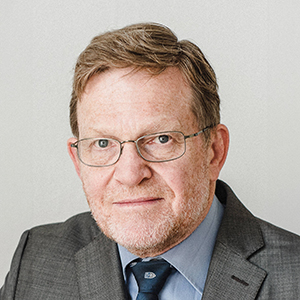
The economics of early stage metal extraction projects do not improve as more time, effort, and money are invested into them. If the economics do not appear sufficiently favorable under initial, generally optimistic, assumptions, the project is not worth funding. This presentation is about how to evaluate the economics of metal extraction projects before significant money has been invested. If the resulting economics look good enough, there is a rational basis for development. A number of case studies will be presented to illustrate the methodology in two broad categories: exploiting a new deposit and comparing novel technology to established technology. Â
Presentation to be Announced
Grand Opening Coffee Break in the Exhibit Hall with Poster Viewing (Sponsorship Opportunity Available)
The Evolving Needs from Critical Battery Minerals in the Energy Transition

This presentation explores the evolving demand for critical battery minerals in the energy transition, highlighting shifting supply chain dynamics, emerging technologies, and strategies for securing sustainable and resilient mineral sourcing to support global electrification and decarbonization efforts.
Critical Minerals and Trade Policy

Changing trade policy is a central theme of commodity markets in 2025 with critical minerals being one of the cornerstones of how these policies are shaped. This talk will examine how these changes across the year helped drive critical minerals markets and Fastmarkets outlook on how they will impact markets in 2026.
Networking Luncheon (Sponsorship Opportunity Available)
Dessert Break in the Exhibit Hall with Poster Viewing (Sponsorship Opportunity Available)
LITHIUM PROCESSING
Chairperson's Remarks
Michael Dry, PhD, Owner, Arithmetek, Canada , Owner , Arithmetek Inc
Analysis of Lithium Carbonate and Hydroxide Production Routes without Use of Soda Ash and Lime

The lithium industry is growing, but the production methods are not improved, and have high environmental impact and excessive production cost. Several production routes are analyzed that do not use soda ash and lime to make battery grade lithium hydroxide and carbonate.
The Impact to Brine Pre-Treatment and Impurities to Direct Lithium Extraction Effectiveness and Economics

A lot of emphasis is placed on the technology choice for Direct Lithium Extraction. However, as the technologies become increasingly ubiquitous, it becomes more apparent what the impact of brine chemistry and more importantly, the impurity removal required, is to make projects successful technically and economically. This talk will discuss some of the more common elements and gasses found in brines that need to be removed to successfully deploy DLE.
Direct Lithium Extraction by Ion Exchange: Process Development, Scale-Up, and Integration into the Lithium Value Chain

Among direct lithium extraction (DLE) technologies, ion-exchange (IX)—where lithium and protons are selectively exchanged—offers high recoveries, selectivity, low water use, and lithium product flexibility. We will provide a case-study in the development and scale-up of Lilac’s IX technology from laboratory to demo scale, and ongoing commercialization efforts. These latter efforts benefit from flexible process chemistries enabled by IX, which contribute to optimized economics at the project level.
Refreshment Break in the Exhibit Hall with Poster Viewing (Sponsorship Opportunity Available)
From Rock to Battery: Electrolysis for High-Purity, Battery-Grade Lithium

The demand for lithium-ion batteries is driving the need for scalable, sustainable lithium production. This presentation introduces an electrochemical technology, providing a direct, flexible pathway from spodumene-derived intermediates to high-purity, battery-grade lithium hydroxide. An update on Mangrove’s first commercial plant in Delta, British Columbia will be shared along with the role of electrochemical refining in simplifying battery materials supply chains.
Scaling to the Lowest Levelized Cost of Lithium in Sorbent-Based DLE Plants
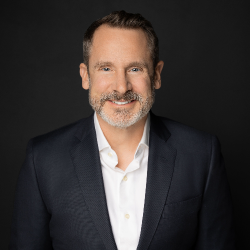
Sorbent-based DLE has become the predominant technology choice for near and medium term brine projects in South American salars and the Smackover region of the US. We will review factors in sorbent-based DLE commercial scale-up that impact OpEx, CapEx, and ESG. This includes column sizing, column optimization, sorbent performance, and component selections that drive total project feasibility in the LiCl plant's productivity, reliability, flexibility, freshwater use, and chemical use.
RARE EARTH PROCESSING
Using Magnetic Forces and Alternative Ion-Exchange Processing to Enhance Rare-Earth-Element Separations

Magnetic forces and alternative ion exchange processing can be used to enhance rare earth elements separations. This presentation discusses these new and modified approaches to perform challenging REE separations and presents related results.
Advancing Low-Impact Extraction of Heavy Rare Earths in Palaeochannel Systems: The Boland Opportunity

Cobra Resources’ Boland discovery presents a rare-earth opportunity within a palaeochannel setting, where heavy rare earths occur as ionically bound mineralisation in permeable clay-sand horizons. Metallurgical testing demonstrates strong response to low-acidity leach conditions and direct precipitation to mixed rare earth carbonate. The project exemplifies a low-impact, processing-efficient development model, highlighting the metallurgical advantages and scalability of clay-hosted REE systems in sedimentary environments
Networking Reception in the Exhibit Hall with Poster Viewing (Sponsorship Opportunity Available)
Close of Day
Wednesday, December 10
Registration and Morning Coffee
Organizer's Remarks
TECHNOLOGY IN PROCESS OPTIMIZATION
Chairperson's Remarks
Adele Rouleau, Senior Environmental Consultant, Geosyntec Consultants , Sr Environmental Consultant , Geosyntec Consultants
Sponsored by: Solid State Microwave for Industrial Applications


Microwave technology has come a long way since the 1940s—with the magnetron born in 1940 for military radar, and microwaves finding new life in everything from ovens to particle accelerators. What’s less talked about: solid state microwave amplifiers also have their roots in defense—but today they’re key to some exciting industrial uses. Broadly, microwaves are used for heating and for generating plasma which we call RF Energy. In mining, the real opportunity is in heating: solid state microwaves can weaken the bonds of materials so that less energy is needed to break them apart. Less wasted energy, less heat loss, meaning a cleaner, more sustainable way to extract metals from ore. In this talk, I will walk through examples of industrial solid state microwave systems. We’ll look at the basic science and the savings.
From Barrels to Battery Metals and the Advancement of Predictive Modeling in Mining

As mining operations confront complex ores, aggressive brines and intensifying water constraints, the margin for error continues to narrow. Engineers face rising operational risks and growing pressure to meet targets. For decades, the oil and gas industry has applied predictive chemistry and corrosion modeling to anticipate and mitigate these very challenges; many failures were prevented long before they surfaced.This session explores how mining professionals can directly benefit from these proven modeling techniques. With accurate simulations, engineers can extend equipment life and reduce chemical overdosing. These gains support not only cost-efficiency but also environmental performance by minimizing unnecessary water consumption and chemical waste. The next leap in mining efficiency will not come from additional sensors; it will come from more accurate models that provide engineers with greater control and foresight.
Coffee Break in the Exhibit Hall with Poster Viewing (Sponsorship Opportunity Available)
Plenary Keynote Session Block
PLENARY KEYNOTE
Chairperson's Remarks
Craig Wohlers, General Manager, Cambridge EnerTech , GM , Cambridge EnerTech
How GM Is Driving Battery Development and Enabling an All-EV Future

GM has established a foundation to accelerate the investment in and development of battery technology with a robust supply chain to support its growth over the next decade. In this talk, Kurt will discuss GM’s strategies for investing in new technologies and how its in-house capabilities enhance those efforts, with an overview and rationale behind key investments made to date.
Unlocking the Next Grid: How Redwood is Scaling Low-Cost & Domestic Storage

Redwood Materials is building the future of energy to power tomorrow’s technologies from AI to grid-scale storage. This keynote will explore how Redwood developed the largest off-grid microgrid in North America using second-life EV batteries, and how battery reuse and innovative energy systems are reshaping the power landscape to meet the rising global energy demand.
How NLV Ultra-Fast Charging Provides Longer Driving Range to an EV?

A disruptive new ultra-fast charging method called Non-linear voltammetry (NLV) was applied to two LIB cells based on NMC and LFP cathodes, respectively. Such an unpredicted result is explained at the atomic level process, supported by DFT-MD simulations, that lithium forms Li2 dimers and Li3 trimers at the interface graphite anode-electrolyte during lithium intercalation (charge).
Advancing Battery and EV Technologies: Strategies for Widespread EV Adoption and the Post-Chasm Era

This presentation outlines Hyundai Motor Company’s integrated strategies to accelerate EV adoption in the post-chasm era, balancing cost, performance, safety, and sustainability. Key areas include the adoption of low-cost chemistries (LFP, mid-nickel, sodium-ion, manganese-rich), process innovations such as dry electrode manufacturing and closed-loop recycling, and advancements in charging infrastructure. Safety measures incorporate proactive defect detection, AI/ML diagnostics, and structural fire suppression in compliance with global standards.
The Road to Profitable Electrification of Transportation Driven by Innovations in Electrochemistry

Electrification of transportation hinges on innovation in battery chemistry, not only on the vehicle. Installation of charging points would be accelerated by stationary storage on site. Power generation by intermittent renewables, requires massive stationary storage. These are three different use cases, each optimally satisfied by a different battery chemistry, all of them beyond lithium-ion, priced no more than legacy technology. In the narratives of all these emerging technologies there are lessons more broadly applicable to innovation: posing the right question, engaging young minds (not experts), establishing a creative culture, and inventing inventors while inventing technology.
Networking Luncheon (Sponsorship Opportunity Available)
Dessert Break in the Exhibit Hall with Poster Viewing (Sponsorship Opportunity Available) with Interactive Roundtables
For more details on the conference, please contact:
Sarah Stockwell, PhD
Conference Producer
Cambridge EnerTech
Phone: (+1) 781-247-1816
Email: sstockwell@cambridgeenertech.com
For partnering and sponsorship information, please contact:
Companies A-K
Sherry Johnson
Lead Business Development Manager
Cambridge EnerTech
Phone: (+1) 781-972-1359
Email: sjohnson@cambridgeenertech.com
Companies L-Z
Rod Eymael
Senior Business Development Manager
Cambridge EnerTech
Phone: (+1) 781-247-6286


#ALTA25